
By Wayne Allensworth
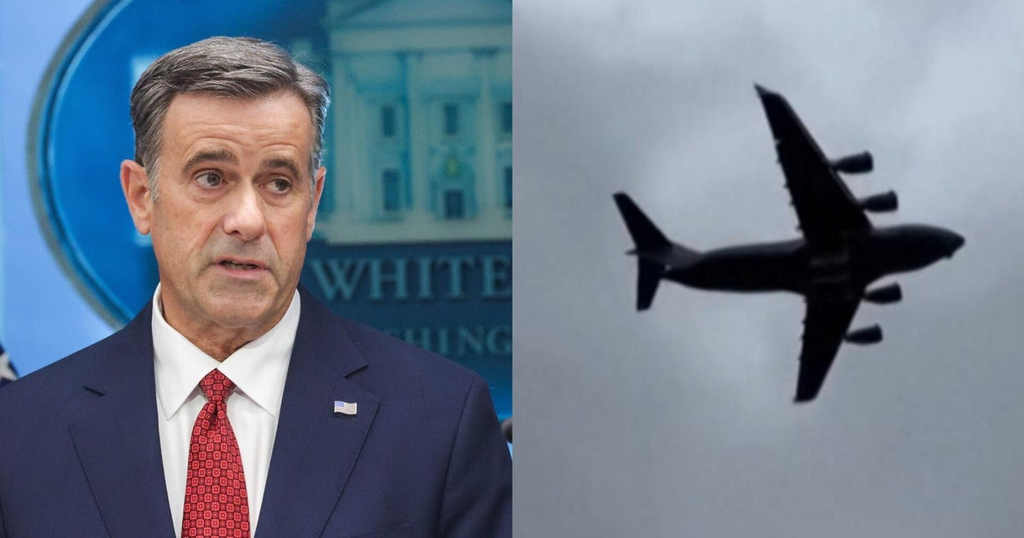
CIA Director John Ratcliffe’s “secret” visit to Moscow last week prompted a flurry of speculation about its purpose and what transpired at his meeting with Russian intelligence chiefs. Ratcliffe did not meet with Russian President Vladimir Putin, but with Russian Foreign Intelligence (SVR) chief Sergei Naryshkin and the head of the Federal Security Service (FSB), Aleksandr Bortnikov. Both sides characterized the meeting as a routine exchange between intelligence bosses, but American presidents have been known to use CIA officials as back-channel envoys in the past. Wars in Iran and Ukraine, and Ratcliffe’s quick trip so soon after Treasury Secretary Scott Bessent declared an “economic D-Day” against Iran, as well the upcoming American mid-term elections in November, suggest something far weightier than a routine meeting. Consider as well that the last Russia trip by a CIA boss was five years ago, when then director Bill Burns went to Moscow to caution the Russians against an attack on Ukraine.
Thus, the wave of speculation about the trip’s aim. Some had it that Ratcliffe went to warn Putin against a possible attack on NATO countries, particularly in the Baltic region. We have read that Putin is under increasing pressure from hardliners to show the Europeans who the 800-pound gorilla is in this conflict, including possibly using hypersonic and even nuclear weapons to force an quick end to the war in Ukraine. Others thought Ratcliffe sought some compromise resolution of the war, easing tensions and scoring a “win” for Trump and the GOP before the elections. Former CIA Analyst Larry Johnson went further afield. Ratcliffe, he opined, might have gone to Russia to take back the bodies of CIA special operatives killed on the Ukrainian front. Then there’s Iran. Maybe Ratcliffe went to pressure Russia to halt supplying Iran with military hardware and intelligence, as well as to cut off economic ties in view of the declared “D-Day” against Tehran.
Russian sources report that Ratcliffe and the intelligence chiefs exchanged heated words; that Ratcliffe and Bortnikov raised their voices. And, they say, Ratcliffe did not come with any compromise in mind. He came to threaten new sanctions against Russia and increased aid to Ukraine if the Russians did not agree to stop the war. One source had it that the intelligence chiefs subsequently reported to Putin that any compromise with the Americans would not be possible at this time. Putin agreed that there was no point in further meetings if they were only to exchange ultimatums. If the Americans wanted to meet again, they had to show they were ready to talk in terms acceptable to the Kremlin. Some sources say that Ratcliffe had proposed a Trump-Putin-Zelensky summit. That doesn’t seem likely to come off even if he did play that card.
Here are some things to keep in mind with tensions increasing and the parties to wars in Iran and Ukraine apparently choosing to escalate rather than ease tensions.
Trump may be asking the Pentagon about the use of tactical nuclear weapons against Iran. A number of analysts have previously proposed Israel as the most likely to go nuclear should it appear that its survival is threatened or if Iran can’t be defeated with conventional weapons and the war is going badly. What’s more, Russian nuclear doctrine has been altered, lowering the threshold for the potential use of nuclear weapons should Russian “sovereignty or territorial integrity” be threatened by conventional attacks. Meanwhile, Ukrainian missile and drone attacks on Russian energy infrastructure continue. The Russians are reciprocating.
The wars in Iran and Ukraine are hybrid wars, fought with a combination of military strikes, information warfare, economic sanctions, and fed by back channels that the Russians and Iranians have used to sell oil despite sanctions. The U.S. and Israel have apparently even resorted to using mass migration as a weapon to threaten and punish Europeans powers who do not support the Iran war. Even discussing using nuclear weapons raises the stakes in both cases to an alarming level. And, finally, it appears that there has been movement toward merging the Ukrainian and Iranian “fronts” in what is already effectively a world war against the BRICS countries and their allies. As far as economic pressures increasing tensions, the U.S. bond market is in trouble, American strategic oil reserves are running low, and “de-dollarization” is becoming more attractive to countries weary of American threats and vulnerability to sanctions that dollar dependence brings with it.
Putin knows full well that the U.S. is running low on munitions that it use against Iran or send to Ukraine, and that Ukrainian production of defense systems such as the Patriot missile would take years to accomplish. He tends to be cautious and patient, wearing down his opponents both physically and psychologically. Putin tends not to lash out unless he feels cornered. That’s how we got a war in Ukraine. The prudent course would be at least not to deliver ultimatums or make threats. Don’t corner him again.
At this time, I think Putin will escalate strikes on Ukrainian infrastructure and advance toward Odessa and Kharkov. There has been talk of another Russian mobilization that would bring fresh troops to the front. The slow, methodical Russian advances continue, but the Kremlin is cognizant of the losses it is suffering as well as inflicting. The Russian public supports him, but it also wants the war to be over. I doubt that Putin would strike, say, Germany, but he might test the West’s defenses in the Baltics to show esolve and to prove, as most analysts believe, that nobody would honor NATO’s mutual defense clause in such a situation. It would be too risky.
The longer the Iran war goes on, the greater the U.S. economic crisis will be. The U.S. finds itself in a very high-risk situation. Neither Trump nor Israeli Prime Minister Benjamin Netanyahu will acknowledge that the risks of continuing the war outweighs the benefits of whatever far-fetched imperial plans they entertain. Desperate delusional leaders face implacable foes. Russia and China will do whatever is necessary to aid Iran. Iran is ready to escalate. Keep in mind that several of the players in this war game view it as an existential conflict. We are whistling past the graveyard.
Please consider supporting American Remnant: A green “Donate Today” button has been added at the end of each article (see below) appearing on the website. If you value what AR is doing, please consider supporting the website financially. $5, $10, or any amount that you can afford. Regular donations would especially be appreciated. Thank you!
Chronicles contributor Wayne Allensworth is the author of The Russian Question: Nationalism, Modernization, and Post-Communist Russia, and a novel, Field of Blood. For thirty-two years, he worked as an analyst and Russia area expert in the U.S. intelligence community.


