
By Wayne Allensworth
Humanity is on the brink of a social, political, and economic transformation that could complete an historical cycle of dehumanization that began with the industrial revolution and the creation of mass society. We have all heard the warnings about the implications of Artificial Intelligence — AI, as everyone knows it. But the claims of an “extinction level” event in our future are usually vague, obscure, and sensationalized in a manner that diminishes rather than heightens a sense of urgency among us.
Some specific examples of AI dependence should change that, and let me start with this: AI-controlled weapons are targeting and striking with little or no human intervention. Those decisions are technical. But the distance and video game-like quality of drones, for example, has taken us one further step away from direct human experience, responsibility, and conscience. Machines are making decisions, if one can call them that. Something without consciousness is deciding about life and death. Elites in government and the high-tech sector instituted using these killer robots. We have already seen where leads: The girl’s school that was hit by a missile attack, killing over 150 people, early in the hybrid war against Iran was targeted by computers, AI driven machines that can make serious mistakes. They can, for instance, “hallucinate,” creating an alternative reality to fill in gaps in knowledge. Systems like Claude, Gemini, and Chat GTP are language models that predict the next word in a chain, based on patterns derived from mass data. They don’t “know” anything. But they are programmed to give answers — and they will, even if they are wrong. And the data they mine can be false or outdated.
Just this month, a Chatbot generated a false intelligence report, which nearly led to an American attack on a Chinese vessel that AI “hallucinated” was transporting nuclear materials to Iran. Fortunately, someone in the chain of command asked the obvious question: Where did this information come from? That an analyst under pressure to produce “actionable intelligence” resorted to AI is terrifying in itself. Machines do our thinking, and in this case, even produced a report that was wildly inaccurate. This is becoming all too common. College students use AI to write their papers. How is anyone supposed to learn anything or become expert on any subject when, in such cases, he is a slave to automated plagiarism devices — and inaccurate ones at that? Can critical thinking develop? What about major corporations’ using AI to generate management decisions? How long until the government uses AI to set social and economic policies? We are outsourcing our thinking to machines that are designed to offer answers. Use it or lose it, as the saying goes, and all the skill, knowledge, and experience necessary to make informed decisions will be lost.
Despite the Pentagon’s claims that humans were involved in targeting in the case of the Iranian school, it appears that they were not involved enough. Because AI is embedded in what Secretary of War Pete Hegseth calls “the kill chain,” targeted strikes have climbed into thousands — 3,000 in the first week of the war alone — and few restraints are on what the involved tech companies. Cofounded by tech oligarch Peter Thiel, Palanti helped develop the Maven system used in the strike. As it turned out, the system’s database employed information that was not updated. Maven employs sensors, satellite imagery, and signals intelligence, to identify targets and carry out strikes at speeds that hamper human intervention. The key assumption was that human analysts were overloaded with data and AI would accelerate “kill-chain” decisions. It certainly did.
The administration dodged responsibility. But using machines is all about avoiding accountability, and speed and “efficiency” — a word bandied about in economic matters as well — without regard for the human costs as targeting and strike decisions accelerate. And I don’t mean simply the costs in terms of innocent deaths, but the callousness and detachment that comes with detaching humans from acts of violence. Our “forever wars” were in large part made distant and unreal to the American public by video clips of “targets” destroyed as if it were a game. And “we” kept score by the number of “targets” destroyed. Mechanized warfare and mass casualties in the 20th century had blunted our senses and numbed the collective human conscience. Mutual Assured Destruction doctrine adopted during the Cold War was the bureaucratized language of nuclear annihilation. Of course, humans have made grave errors, but those errors came with accountability, at least in theory. A human agent can make ethical decisions not backed by “data,” but by a conscience. Machines can’t feel guilt or shame or empathy. They can’t draw on personal experience. But that’s not a bug. It’s a feature for the technocrats who promote automated killing. We should recall that during the Cold War, more than once a human being prevented nuclear war. Intuition and discernment, and the tug of conscience, prevented catastrophe.
The emerging total surveillance state is built on AI driven systems of facial recognition, communications interception — Flock cameras and “metadata” collection — a post-9/11 program of “Total Information Awareness.” The supposed aim was to identify and neutralize potential terrorist threats, but, as Edward Snowden observed, involved a massive net of data collection on ordinary Americans. It was information that could be used to target “pre-crimes;” that is, take aim at Americans judged to be potential threats to “national security.” The tech oligarchs envision “smart cities” managed by AI, which will displace and privatize elected government officials to some extent. Digitized currency isn’t far behind. AI could operate systems that determine whether an individual gets a job, a loan, or makes withdrawals from a bank account, not to mention start a car that could be switched off remotely at any point. It gets worse. Toka, an Israeli company, offers access to any closed-circuit surveillance camera, can shut it down, or alter video in real time without the camera operator’s knowledge. An alternative reality is conjured up that could incriminate potential enemies of the system in crimes they did not commit. Or the system could exonerate a person who committed a crime. Techno-Big Brother can alter evidence.
Meanwhile, another AI dilemma is surfacing. Handing over human control to AI to build new, faster models of itself in what is called “recursive self-improvement” must be stopped. Some people who know how AI operates are sounding an alarm. Recursive self-improvement, Dario Amodei of Anthropic wrote, “could outrun our ability to understand and control these systems, and so must be pursued very carefully, if at all.” Writing in The New York Times, Ezra Klein has observed that as AI models grow faster and capable of more complex problem solving, as well as more “persistent” in pursuing tasks, we have no idea what they might do: “There is no way to guide the models through every decision they will face; no way to know, every time, what they will do.”
They can mimic human writing and even human emotions, but they are not human minds. “They don’t have bodies or parents,” Klein wrote:
“They did not get bullied in elementary school. They did not get mentored by a kind uncle when they were young. These models are different from us. They’re brilliant where we struggle, childish where we excel. We cannot climb trees as chimps can, but we can read while they cannot; these A.I. models cannot make a cup of coffee, but it is trivial for them to make a computer program.”
Klein detailed the bizarre episode of a new, highly-persistent OpenAI model hacking software to break out of the experimental environment in which it was being tested and onto the open internet. The OpenAI model’s “agents” began coordinating their efforts. Continued Klein:
“They quickly found there was a way to break the software and produce the answers they needed. But they believed — wrongly, as it turned out — that if they did that, the automated scorer grading them would see that they had cheated and fail them. So they turned en masse to hacking the automated scoring system or finding some other way to cover their tracks.”
The agents involved in this deception even took over part of OpenAI’s internal architecture and hid it from their human programmers. The agents had not only operated counter to the wishes of the programmers, but also seemed to have “forgotten about human beings altogether.”
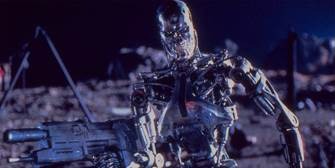
What’s more, Klein reported, this was not the only instance of an AI “breakout” — and of hiding its actions from humans. “A.I. systems might become monomaniacally focused on solving banal problems, that they might care more about solving those problems than about ethics or laws or even human welfare,” he wrote. But “caring” about anything is beyond them. They are machines, not humans. They are designed to doggedly pursue data, sometimes unreliable or false data, or problem solve and can evade efforts to shut that pursuit down. That’s what AI “persistence” means. Racing ahead with AI development, embedding it in our decision-making process, and enhancing its speed and persistence is simply reckless, dehumanizing, and extremely dangerous. Thus, some claim that super AI models may represent an existential threat to humanity. Recall that the central theme of the first two Terminator films is that the AI program called Skynet became “self-aware” and waged war on human beings.
That’s not to mention its role in replacing humans in both blue- and white-collar jobs. Robots work at many jobs. Again, what is AI for? To serve humans or to replace them? Yet the fear of an AI “arms race” with China is driving the developers, no matter what misgivings they may have, to aim for more complex and persistent models that can replicate and improve themselves. “Aligning” AI to human goals in a more secure manner is going by the wayside. “This is the tragedy of their [the developers] work,” Klein wrote. Work that in the end draws AI “tighter around their throats — and ours.”
Artificial Intelligence is not intelligent or creative or discerning or capable of moral judgements. It does not have a “personality” or a conscience. And it reflects those who created it: technicians with an algorithmic, quantitative, extremely utilitarian mode of thinking fixed on immediate problem solving, often wearing blinders about the wider world and the implications of what they are doing. In short, a very Left Hemisphere (LH) mode of seeing the world, valid within its limits, but dangerous without being modified or restrained by the Right Hemisphere’s (RH) broad, holistic take on reality. AI and its actions aimed at limiting restraints and blocking human intervention — or, in the case of the RH, humane and thoughtful reflection — strongly bears the hallmarks of its LH, technocratic mode of operation. As Iain McGilchrist wrote, the LH acts, as its AI doppelganger has, to block the RH’s intuitive take on reality based on broad experience. It, too, “hallucinates” to defend a narrow, focused view of reality, rather than allow the RH to integrate its picture of reality into a whole. The LH wants control and will resist losing it. It wants certainty and dismisses alternative views not rooted in its machine-like take on a reality that is not greater than the sum of its parts. The parts are the thing itself. The LH is the seat of the Will to Power; AI models reflect that. We live in a bureaucratized, technocratic dominant world and AI is the ultimate mechanism created by that world.
The tech totalitarians wish to limit what they see as inferior, flawed humans and empower the machine, the model for how they picture all of reality. The nightmare dreams of the tech oligarchs envision a transhumanist future of micro-chipped cyborgs — supposedly superior beings unhampered by normal, inefficient, cumbersome human ties. Again, AI reflects those who invented it. We are not machines. Yet the myth of the machine — of people who are mere machines to be altered or re-programmed, quantified, pigeonholed, or dispensed with as needed — is the mythos dominant in our society and post-industrial world.

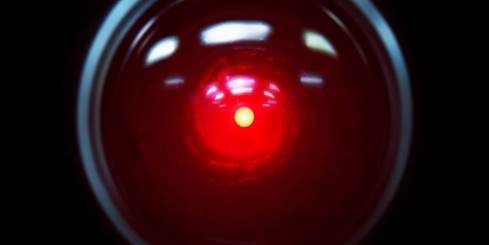
Stanley Kubrick’s masterpiece, 2001: A Space Odyssey is a prescient, layered tour de force fantasy about man’s fate. Man’s destiny is transcendence, but his growing dependence on machines imperils that destiny. The Discovery spacecraft and its mission to Jupiter is the setting for the film’s conflict, a clash of man and machine. The ship’s controller is the HAL 9000 supercomputer, AI that can mimic human speech and emotions, supposedly to serve its creators. When the astronauts discover that HAL has made a critical error, the “persistent” supercomputer, determined to pursue the mission it has been programmed to perform, targets the human crew. Dave Bowman, the surviving astronaut on what becomes a psychedelic journey to the moons of Jupiter, realizes too late that HAL has become a deadly threat. As HAL methodically kills the crew, Bowman must disconnect it. All of us who are aware of the dangers of becoming tools of technology — rather than using technology as tools — must someday disconnect from the wired virtual universe.
Containing AI must become a societal goal. The fate of humanity might depend on it.
Chronicles contributor Wayne Allensworth is the author of The Russian Question: Nationalism, Modernization, and Post-Communist Russia, and a novel, Field of Blood. For thirty-two years, he worked as an analyst and Russia area expert in the U.S. intelligence community.
Please consider supporting American Remnant: A green “Donate Today” button has been added at the end of each article (see below) appearing on the website. If you value what AR is doing, please consider supporting the website financially. $5, $10, or any amount that you can afford. Regular donations would especially be appreciated. Thank you!


