
By Wayne Allensworth
The United States of America will soon mark its 250th birthday. But America as such is but a vestige within the body of a failing empire. By “America,” I mean the cultural and demographic core that once defined our country. With a diminishing and divided “red” and “blue” core, “we” are a chaotic mass of competing interest and identity groups. The result might well be tightened authoritarian controls to maintain “order.” As I’ve noted previously, the U.S. is entering a post-imperial era of technocracy and multipolarity. The center of geopolitical power is shifting eastward as the U.S. and Europe teeter on demographic displacement and suffer political dysfunction and economic stagnation. The American Empire was partly an accident of history as the nation emerged as the last man standing among the industrial nations after the worldwide conflagration that began in 1914 and supposedly ended in 1945, only to continue as a Cold War that has never ended. But the period of American dominance is closing.
The empire followed a familiar historical pattern of hubris, overstretch, blowback, and decline. Blowback in the form of terrorist attacks and of reverse colonization, as the chickens came home to roost in waves of Third World and non-European immigration. The empire’s defeat in the Iran war underscores those trends. The Trump Administration had no choice but to attempt to halt the Iran war because it faces economic disaster as oil supplies dwindle. The simple fact that the U.S. lacked a sufficient industrial base, one shipped largely to China in previous decades, meant Washington could not produce the military hardware used up so rapidly in the war with Iran, as well as an economic cushion needed to continue the war and maintain deterrence elsewhere. Whether that attempt will succeed is an open question.
Meanwhile, the war NATO provoked in Ukraine continues, prolonged by Western support for Ukraine. Drones and long-range missiles in that war, along with targeting and intelligence data supplied by the West, marked another profound historical shift because technology diminished the advantages Russia enjoyed in manpower and conventional weaponry. Russian President Vladimir Putin faces criticism from hardliners who want him to end the war quickly. Recently, influential Russian foreign policy commentator Sergey Karaganov floated a scenario in which Russia would strike at Western Europe with conventional weapons, perhaps hypersonic missiles, to remind Europe it faces a great power in Russia and that its “red lines” must not be ignored. At present, Ukraine, with Western help, is launching drone strikes deep into Russian territory. The Russian army continues to advance, but only incrementally. In Karaganov’s and undoubtedly many others’ eyes, the West is ignoring Russia’s true military potential because Putin has refrained from all-out war. The status of “Special Military Operation” for Russian forces in Ukraine limits the types of weapons, as well the degree of mobilization and the tactics, the Russian military can use. Karaganov maintains that for Russia to re-establish deterrence, Moscow must unleash its full military potential. If the West persists in supporting Ukraine after a conventional strike, he believes Moscow would be justified in using nuclear weapons to force the West to back down. Karaganov does not believe that the West — particularly the United States — would respond with nuclear retaliation.
Then there’s Iran. It too has used inexpensive drones and missiles to undercut the power of the U.S.-Israeli war effort. In both theaters of the globalists’ wars — wars meant to stave off the inevitable shift of the geopolitical balance of power eastward — the potential use of nuclear weapons suggests alarming scenarios. Facing a hard and costly slog in Lebanon and defeat in Iran, a desperate Israel might use nukes.
Russia, Iran, Israel, Europe — and, whether we know it or not, the U.S — face an existential crisis. This is the global strategic situation as July 4 approaches.
Watching Internet video clips of Europeans visiting the U.S. for the FIFA World Cup soccer tournament commenting on American life has been interesting and entertaining. The Euros are having a grand old time. They seem to enjoy American excess, and the knack a commercialized pseudo-culture has for reproducing a Disneyland version of something that was once true, real, and authentic. The Euros gorge themselves on massive barbecue ribs, are amazed by the huge portions in chain restaurants, love air conditioning, and really appear to believe that Buc-ee’s or the aquariums and stuffed animal displays at cavernous Bass Pro Shops are the “real” America, along with “Jesus-is my-best-friend” -bumper-sticker Christianity, monster trucks, and, of course, guns. I happen to enjoy Buc-ee’s barbecue and shop at Bass Pro Shops for hunting and shooting gear. But I miss the time when family-owned sporting goods stores and smoke shacks handled that kind of business.
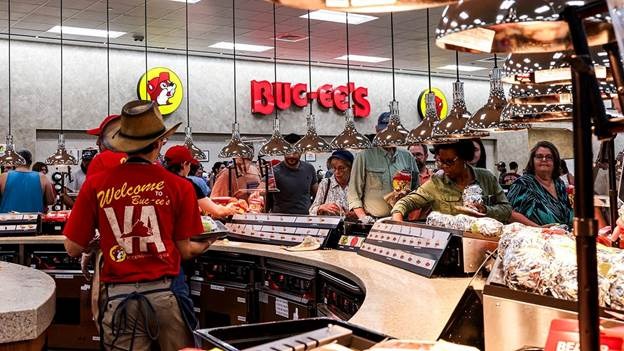
I appreciate the visitors who admire the vast American landscape, the beauty of our natural parks, and the wide horizons of our country. The friendliness and openness of Americans is something foreigners always notice and find endearing. The rest is simply depressing. Which reminds me of James Howard Kunstler’s book The Geography of Nowhere about the Disneyfication of America, a society with an ethos of paving over natural beauty, impoverishing rural and small town America, and demolishing historical buildings, then waxing nostalgic about what has been destroyed at Disneyworld’s Main Street USA. I’m a bit encouraged by the resistance to data centers. Maybe there is a little bit of life left in us. Steady, capable people are still out there. I see more of them when I leave a metropolitan area, though the rural and small-town decay is troubling.
A country hooked on militarism, superpower status, and a warped notion of Messianism (on what passes for the right and the left these days) is trying too hard and is too self-conscious to have genuine self-confidence. I remember a different America, proud but not so boastful; confident, but not arrogant; quietly capable, and far more stable socially and emotionally. Men like my father didn’t wear their opinions on T-shirts or traipse around in full-camo. They had firearms but didn’t fetishize them. Their pickup trucks were work vehicles, not motorized luxury Death Stars on wheels. Their masculinity was too self-assured for that. They would shake their heads at much of what the Euros seem to think is authentic. But that lack of authenticity is a hallmark of a post-modern, fragmented, atomized society — one addicted to fake prosperity built on massive debt, fiat currency, a might-makes-right foreign policy, and the now-diminishing power of the petrodollar.
I’m no admirer of Idiocracy in power. I don’t care if my country is a superpower. I hate the tawdry and embarrassing public displays of excess, self-absorption, and sheer idiocy. British writer G.K. Chesterton championed distributism and was a “little Englander” who favored a retreat from empire, and, as he once put it, giving the English people their land back after the enclosure of the commons by the rich and powerful. He favored a wide distribution of wealth and political power. I prefer a little America — if you like, a Republic — one that was wise enough to preserve its system and its people, and modest enough to forgo slaying dragons in distant lands. Like the English before them, Americans became intoxicated by empire and fooled by crafty politicians who were conducting class warfare on their own people while distracting them with, in the case of the United States, make believe enemies and culture wars nobody intended to win. In both cases, the people didn’t realize they were being replaced until the battle was lost. In the America that was her best, there was no large standing army, people remembered George Washington’s Farewell Address, and locally-raised militias elected their own officers.
The ruling elite’s class warfare strategy has been wildly successful. The petrodollar and massive deficit spending, along with consumer culture, created false prosperity and an illusion that all was well. That era is drawing to a close, as BRICS countries and their allies move to performing transactions in their own currencies, undercutting the dollar as the world’s reserve currency and any incentive to finance U.S. debt. America is no longer considered the safe haven it once was.
Billionaires are getting richer, while the middle class is squeezed and the working class becomes part of a burgeoning underclass that is to be pacified by Universal Basic Income and an Internet connection, controlled by a digital panopticon fueled by AI data centers that will drain precious resources and create massive scars on our country’s landscape. Elon Musk’s SpaceX IPO made him a trillionaire, a neat trick pulled off by influence that won him exemption from the normal rules governing such ventures. What goes up must come down and, not surprisingly, the SpaceX bubble is already bursting. But the point to those paying attention has already been made: Musk is just one of the oligarchs of the Epstein Party who have manipulated the system, bought politicians, and exempted themselves from the rules to create a wealth gap so wide it represents an economic and social Grand Canyon, while the working poor fall into a Marianas Trench of despair. Musk and his kind — say, Peter Thiel of Palantir and Microsoft’s Bill Gates — are hardly Randian entrepreneurs swimming against the tide. They have used their wealth, power, and connections to game the system and grow so wealthy they are as distant from us as the gods on Mount Olympus were from the humans they tricked and manipulated from on high. They feel no connection to and have no stake in this country. They can bail out any time, while they fantasize about colonizing Mars. Thiel and his groupies — who include members of both parties such as Musk, Jared Kushner, and Senators Ted Cruz of Texas and Cory Booker of New Jersey, and many other luminaries — were recently off to a conclave of Thiel’s Dialog Society discussing, among other things, how to survive WWIII. That is, their surviving a world war they are helping to make a real possibility. These self-described “exceptional people” are also apparently obsessed with longevity and sex.
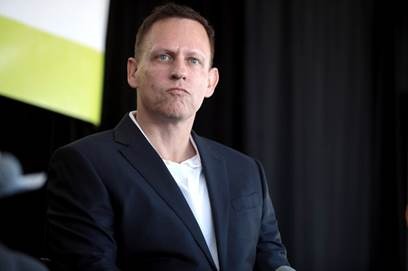
Peter Thiel
I recently commented on an interview with NYU Professor Scott Galloway on the otherworldliness of the superrich. They live at a social altitude where the air is so thin they imagine themselves to be immortal gods. The rest of us are expendable pawns in their fantasies. Such a massive concentration of wealth and power is antidemocratic, and antihuman, a moral and spiritual obscenity. Galloway recalled that his father was a business executive. His father’s employees lived nearby. They belonged to the same country club as his father, and their kids went to the same schools. Rockefellers and Carnegies notwithstanding, a well-off businessman like Galloway’s father had close connections to his hometown and its inhabitants. He probably thought himself responsible to them.
We are about as far from the Jeffersonian ideal of a country of family farms, craftsmen, and small businesses, as well as the civic virtues concomitant to that ideal, as can be. Yet we have been brainwashed into believing that unrestrained self-aggrandizement and whatever underhanded games are necessary to get filthy rich are the American Dream. I call it a nightmare. And please don’t tell me this is not a zero-sum game in which the rich get richer and the poor get poorer. That’s exactly what it is. The oligarchs want it that way. Trade, financial, economic, and immigration policies they pushed have deindustrialized the country and made a wasteland of our once world-renowned industrial heartland. Their desire to use AI to eliminate people they see as the surplus population is using up precious natural resources like water, burning massive amounts of power to fuel the perpetual motion machine of AI data centers, while polluting the air, the water, and destroying the tranquility of communities they are wrecking. Yet Fox News will bleat about “socialism” if anyone suggests trust-busting regulation and/or taxation and financial policies to break the power of the ruthless oligarchs who don’t give a damn about this country. I didn’t hear such protests when the oligarchs benefited from corporate socialism, the manipulation of the system that helped make them so rich they could buy Manhattan in a heartbeat.
Again, such a concentration of wealth and power is an anti-democratic obscenity. Meanwhile, the Republicans want to cut Medicare, Medicaid, and Social Security, but support a $1.5 trillion defense — excuse me, War Department — budget. Those programs could be managed better by a combination of waste reduction, taxing oligarchs, and reindustrialization that incentivizes marriage and families with children who would become the future workers, who in turn, finance Social Security. Reducing the drag on overall social services as a result of mass immigration would help, too. I can’t go along with some of Paul Krugman’s conclusions, particularly regarding immigration, in a recent Substack piece about financing Social Security. But some of his good points are worth considering. Here are few: the amount of additional funds needed to keep paying full benefits for the next 25 years amounts to 1.06 percent of gross domestic product:
“To put that number in perspective, the Trump administration proposes increasing military spending next year by $420 billion, equivalent to about 1.4 percent of GDP — without any discussion of whether that’s affordable.”
Krugman observed that Social Security is being damaged by growing income inequality:
“Payroll taxes are levied only on wages up to $184,500, and they don’t touch capital income. With the distribution of income increasingly shifting from labor to capital, as well as becoming more unequal among wage-earners, revenue from the Social Security payroll tax has been falling as a share of national income.”
What has happened in my lifetime is a massive wealth transfer — wealth redistribution, if you will — upward. Yet wealth redistribution is only considered bad if it’s redistributed downward. Just ask Zio-conservative Fox News.
So here we are. America at 250. The state of the union is not good, and we have yet to feel the full impact of the Iran War. What I feel is not so much an impulse to celebrate as a sense of terrible loss, much of it self-inflicted. Yet I am grateful. I don’t need superpower status and bellicose warmongering bluster to feel important. I couldn’t care less about whether America is a big box store cornucopia everybody wants to break into. Things will keep worsening and most Americans will simply shrug their shoulders and check out what’s streaming. But I try not to take counsel of my fears. I’m grateful to be a real American. I’m grateful for the memories. I’m grateful for the authentic culture that I knew. I’m grateful for my family and friends. We can keep the real America alive simply by refusing to be anything but ourselves.
I don’t need fireworks displays and parades to remind me of that.
Please consider supporting American Remnant: A green “Donate Today” button has been added at the end of each article (see below) appearing on the website. If you value what AR is doing, please consider supporting the website financially. $5, $10, or any amount that you can afford. Regular donations would especially be appreciated. Thank you!
Chronicles contributor Wayne Allensworth is the author of The Russian Question: Nationalism, Modernization, and Post-Communist Russia, and a novel, Field of Blood. For thirty-two years, he worked as an analyst and Russia area expert in the US intelligence community.


