
By Wayne Allensworth
What seems like a long time ago, in a world that now also seems far, far away, I attempted and hoped to have some small influence, some significance in the vast sweep of history as it was unfolding before our eyes. I was still working in the so-called Intelligence Community. Russia was my bailiwick, the focus of what I saw as an attempt to understand that huge, complex country, its place in the world, and how its system worked. I believed the most important step in reaching that goal was to attempt to see the world through their eyes, then gauge how that perception shaped Moscow’s relations with the West and with my country. It’s difficult to overestimate how important a sober, nuanced view of that relationship can be. The two nuclear superpowers very much needed to reach an understanding, a balance of power and interests, so that we could both go about our business with some sense of security. And that would have made everyone safer.
But I knew very well by the mid-2000s that the West’s strategic goal was not peace with a former enemy. Instead, the goal was weakening Russia and, if possible, overthrowing Vladimir Putin and replacing him with a pliable figure the West could manipulate. During the Russian political protests that began in 2011 and continued over the next couple of years, mainly in Moscow but also in other cities, the anticipation of a successful regime change, a “color revolution,” was palpable in Washington conference rooms. I argued at the time that it wouldn’t work. Russia’s growing suspicions of the West’s intentions would turn into outright hostility.
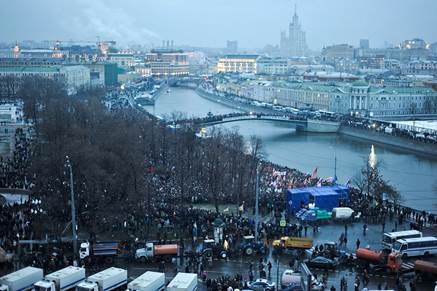
It was about this time and in the succeeding years, notably because of the 2014 Western-backed coup in Kyiv, that I began to realize that “we” were not the good guys in global affairs.
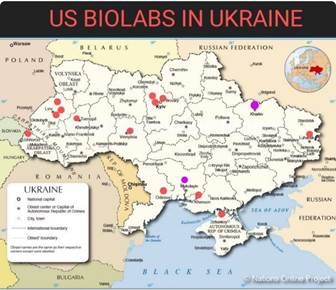
The consequences of that move, in anticipation of Ukraine’s eventual inclusion in NATO, were as plain as day: The West was using Ukraine as a dagger pointed at the heart of Russia. And Russia knew it. The West was ignoring Russia’s security red lines. Meanwhile, Ukraine’s war with the pro-Russian Donbas region was encouraging Moscow to take military action. It was entirely predictable that Moscow would react as any other great power would by intervening to prevent a hostile military alliance from continuing to encroach on Russia’s critical security zone in Ukraine. It wasn’t a big mystery to clear-headed observers that NATO expansion was the catalyst for conflict, a proxy war in which Ukraine would be destroyed. “We” were supposedly supporting the “good guys” in Kyiv. That was a lie, of course. There weren’t any “good guys” to support, and we had no business making such judgments in the first place. Ukraine would have been much better off as a neutral state. But Ukraine’s wellbeing was far from a major concern for the West. Just recall the material that outgoing Director of National Intelligence Tulsi Gabbard recently released about U.S. “biolabs” on Ukrainian territory. What’s more, some of the globalist masterminds wanted Russian intervention and a proxy war. They thought they could “bleed” Russia at the expense of Ukraine and foment a coup in Moscow. Ukraine was simply a petri dish for the globalists’ experimentation.
I was among those who criticized the recklessness of provoking the Russians. But Washington and Brussels ignored far more prominent voices than mine.They had memory-holed the warnings of “wise men” like George Kennan about the consequences of NATO expansion eastward. The people who mattered, and even many lower-level players in this Great Game, were simply impervious to sensible, sober assessments. You see, dear readers, the underlying assumption of our reckless foreign policy — regarding Russia, Iraq, Afghanistan, and more — was that “we” were “the good guys.” It was hubris in the guise of childish moral posturing wrapped up in a globalist fantasy. “We,” the “good guys,” could by definition do no wrong. Countries outside the globalists’ reach could have no legitimate national interests. Arguing that they did was frustratingly futile.
John Kiriakou is a former CIA official who blew the whistle on the agency’s torture program and paid the price for it, doing two years in a federal prison on trumped-up charges. His commentaries are interesting and informative. In one of them, he was asked at what moment he became disillusioned with his career. He answered that his moment of truth came when he realized that “we weren’t the good guys.” Exactly. “We” as in the powers-that-be who have for so long convinced an inattentive muddleheaded public that endless war, endless meddling in the affairs of other countries, and a sanctimonious, myopic, and self-serving attitude about the rest of the world is “our” unquestioned right. Of course, during that post Cold War consensus that “we” were the good guys, during that Great Game of nations — that vast, global drama that entertained us — our own country was sliding into social, political, and economic crises.
I look back at my own career now and wonder whether it was a total failure. In some ways, it was. Few of us as individuals can affect whatever Long March the elites are taking us on. All we can do is follow the dictates of our conscience and that, I believe, itself has meaning. In the thin air of Washington, “we” take an Olympian view of the course of human events without some reflection on where and how those events started or the real purpose behind it all. The events on the ground, the small details, disappear at scale: How many millions have been killed or maimed by forgetting that? How many countries have been destroyed by our inability to see things in proper context, on a human scale? Move in and focus, and one can see the carnage and wreckage that are left behind by self-styled “good guys”: Ukraine has been depopulated, many of its towns and cities destroyed, its army decimated, its coffers robbed by “our” selected local “good guys.” Nobody in power in Washington gives a damn. It can only matter to those who can see, who have rejected ideological blinders, who understand that the human drama matters, especially at the ground level where everything comes into focus, while keeping in mind that purpose and meaning are bound up in the vast universe we inhabit. We should never be too sure of ourselves, certain enough to demonize entire nations, or anyone outside whatever closed system we have mentally constructed for ourselves.
The things that matter most in our day-to-day lives are on a human scale, in the context of our particular circumstances. What if more of us thought that way? What if we rejected the fabricated narratives elites construct for us? What if we stop believing in the Great Game that is destroying us and might destroy the world? What if we mentally checked out of it? What if we resisted their efforts to neutralize our conscience and co-opt our patriotic zeal? What if we started acting as if we were truly a free people not cowed by fear or brainwashed by propaganda? What if we didn’t care about ruthless superpower games?
And finally, what if we stopped thinking we are the good guys who must solve the world’s problems, and worried about our own country — our neighbors, friends, families, and the wide, beautiful land we inhabit? What if we loved our lives and our country for their own sake?
The human drama that all of us can play a part in starts right at home.
Please consider supporting American Remnant: A green “Donate Today” button has been added at the end of each article (see below) appearing on the website. If you value what AR is doing, please consider supporting the website financially. $5, $10, or any amount that you can afford. Regular donations would especially be appreciated. Thank you!
Chronicles contributor Wayne Allensworth is the author of The Russian Question: Nationalism, Modernization, and Post-Communist Russia, and a novel, Field of Blood. For thirty-two years, he worked as an analyst and Russia area expert in the US intelligence community.


