By R. Cort Kirkwood (The New American)
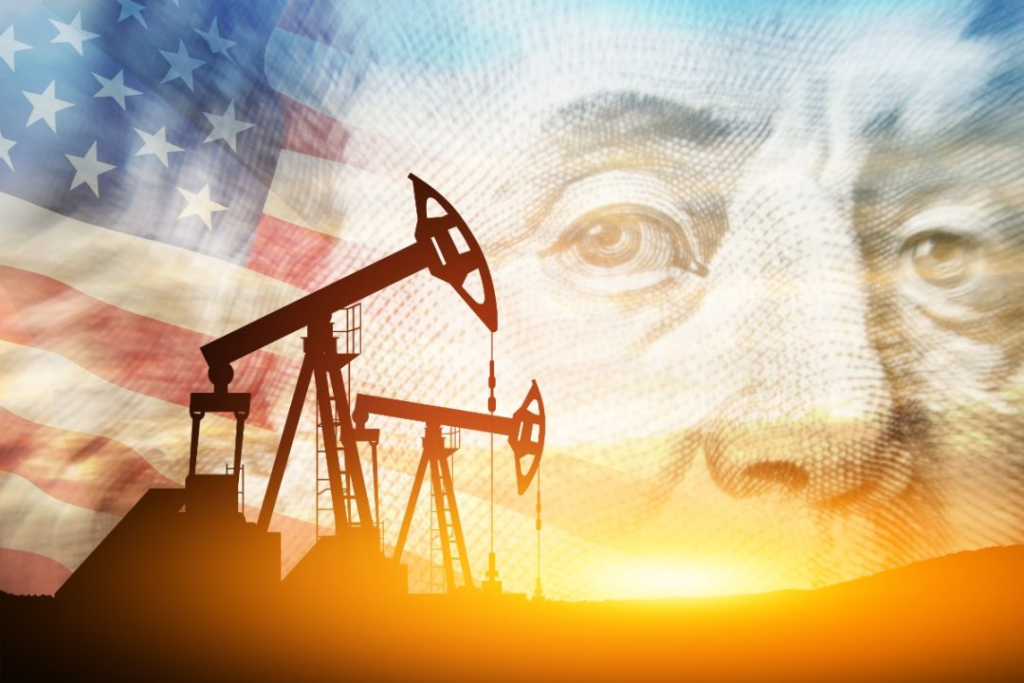
The United States is facing the collapse of the petrodollar that has propped up the American economy for the last half-century.
Former Navy SEAL and podcaster Shawn Ryan warned that the war in Iran and ensuing closure of the Strait of Hormuz is a coming debacle for American finance. China’s currency, he said, will supplant that of the United States and become the global standard.
And Ryan isn’t the only Cassandra portending doom for the dollar as the world’s reserve currency.
Fortune magazine explained that war has exposed the weakness of the petrodollar. And the Independent Institute observed that the U.S. seems to wage war on any nation that attempts to move away from using the dollar as the world’s oil-trading currency.
And the war in Iran, Deutsche Bank warned in March, has created “a perfect storm for the petrodollar.” Ahead might be the era of the petroyuan.
Rise of the Petrodollar
As Fortune scribe Sasha Rogelberg explained, the Nixon administration created the petrodollar in 1974, when Saudi Arabia agreed to sell oil only in dollars in return for security and military aid.
“The U.S., then under President Richard Nixon, was looking to secure global demand for the U.S. dollar following the end of the gold standard in 1971,” Rogelberg explained:
In the wake of the 1973 oil crisis, the U.S. was motivated to solidify its own oil supply chain.
Because oil was and is so fundamental to nearly every industry, the “petrodollar” became ubiquitous, and the dollar became the cornerstone of the global economy: Oil-rich countries needed a place to put their growing reserves of dollars and turned to U.S. Treasuries. Countries buying oil did so in greenbacks.
This cycle has created a currency architecture heavily favoring the U.S. dollar that has persisted for more than 50 years. Saudi Arabia, as well as Qatar, Oman, Bahrain, and the United Arab Emirates, require an estimated $800 billion in supporting reserves as a result of having their currencies pegged to the U.S. dollar. The Gulf Cooperation Council sovereign wealth funds have more than $2 trillion invested in U.S. assets.
Now, however, the U.S. attack on Iran, which closed the Strait of Hormuz, has upended that arrangement. The war has exposed “the weakness of the petrodollar” because “some ships are able to pass through the choke point by paying in Chinese yuan.” Some 20 million barrels of oil — 20 percent of the world’s supply — pass through the strait every day.
For years, Rogelberg explained, Gulf countries have been “trading oil outside the U.S. dollar and therefore definitionally destroying the principle of the petrodollar as the exclusive currency for trading oil.”
Read the rest here: Reports: Petrodollar Collapsing, Portending Global Reserve Currency Shift to Chinese Yuan – The New American


