
By Wayne Allensworth

Please consider supporting American Remnant: A green “Donate Today” button has been added at the end of each article (see below) appearing on the website. If you value what AR is doing, please consider supporting the website financially. $5, $10, or any amount that you can afford. Regular donations would especially be appreciated. Thank you!
The heavy spring thunderstorms filled the ponds near our home and the streams behind us with rushing water. Next morning, I walked the path and spotted a mallard hen entangled in the weeds at the bank of the stream. She was fighting to release herself as her five ducklings in the grass nearby nervously waddled around her. I took off my shoes and stepped into the stream. The hen cackled in fear, but I put my hands beneath her and lifted her up. She broke free and flew to the bank. One of her legs was injured, and she hopped in the grass before settling near the ducklings. That afternoon, I walked by again to check on her, and she paid no attention to me, squatting restfully near the stream while her brood paddled around in the water.
The following day, I walked near the stream and saw a hatchling bluebird on the ground. I looked up and saw the nest on a limb above and walked back home to get a ladder. The little one squeaked loudly when I picked him up and started climbing the steps. Two bluebirds were screeching and swooped at me, evidently to protect the little one. But when I placed the little bird in the nest, they settled on limbs and silently watched me as if they knew — I think they did — that I meant them no harm.
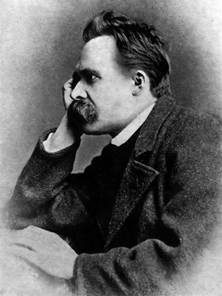
I see the animals around me as part of the landscape, as important nodes in the web of creation as I am. I have always loathed cruelty to animals as a sign of the inner Satan that lurks in the depths — and sometimes not so far from the surface — of the human psyche. The philosopher Friedreich Nietzsche suffered a mental breakdown after seeing a coach driver mercilessly beat a broken-down draft horse in Turin, Italy. Nietzsche rushed to aid the hapless animal, embracing its neck to protect it from the heartless man. The possibly apocryphal story marked the beginning of the great philosopher’s decline into madness, which may been the result of his suffering with tertiary syphilis. That aside, as the story goes, after the incident he laid silently on a divan in his mother’s house for two days until he muttered the words Mutter, ich bin dumm (“Mother, I am stupid”). Perhaps he realized that his philosophy would later be used to justify untold cruelty. I have always wanted to believe that the Turin horse story was true, and that the great philosopher, chaffing under the social yoke of those he regarded as mediocrities, had a spark of empathy — regardless of his condition — that did not flame out. That he knew in his heart that all living things are conscious, alive, expressions of that Great Consciousness that is the well of all Being.
A sign of Man’s increasing arrogance since the Enlightenment is judging all creatures as if they are machines equipped with rudimentary and in some cases, more complex, computers that we call “brains.” By a highly improbable series of accidents, we are to believe, these precision machines evolved and animated the “meat computers” that populated the planet. The “computers” could theoretically be reprogrammed and tinkered with by superior minds, perhaps by installing new “software.” These human HAL 9000s would live among the “meat bags” they considered other living things to be. If one wishes to ponder the wellspring of this ungodly arrogance, I can only suggest reading, for example, Milton’s Paradise Lost. The haughty superiority that can unleash unfeeling sociopathic cruelty is as old as the world. But its intellectual underpinnings in our now dying civilization date back at least to the musings of Renee “I think, therefore I am” Descartes. The only thing that seemed real to him was his own mind. But was anything else “real?” Was all else outside that mind an illusion? A projection onto a screen in our own heads? Descartes even doubted the continuity of the self. He imagined a decontextualized, isolated mind. He looked out his window and saw other people as distant, as separate, as things — as automata.
The machine myth casts the world as a mechanical device made up of parts that can be disassembled, improved, perhaps, not as an organic whole that is an expression of God. The parts are the thing itself. Not a process constantly coming into being, but a mechanism, a dead, lifeless thing. In time, such attitudes provided a base for post-modernism’s view that there is no ultimate Truth, and, therefore, what is “true” is imposed by the strong on the weak. And that reduces all human relations to a power struggle, whether that of “identity politics,” or between individuals. Common morality is a matter of utility, and not a pressing imperative, since “good” is a “social construct.”
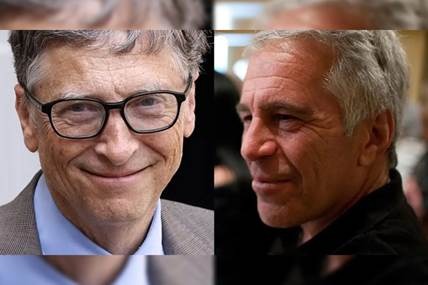
Critiqueing this stream of thought is important because it is the predominant one in our society. “Intelligence” in the sense of a supercomputer’s ability to process “information” (not knowledge, much less wisdom, which are broader categories) is valued, and superior “hardwiring” is granted precedence and power over inferior mental machinery. Cruelty to “inferiors” is nothing new, of course. All people have at one time seen themselves as the “Chosen,” with special privileges over others. The Luciferian impulse, that Will to Power, has always been with us. But the notion that the universe itself and its animated entities are merely accidental machines lends a justification to the techno-totalitarian quest for “transhumanism.” In my reading of some of Jeffery Epstein’s e-mails, I came across an exchange in which his interlocutor — referencing a question Epstein allegedly asked Microsoft tycoon Bill Gates — wondered how they could get rid of all the poor people. A burden to be dispensed with.
As far as consciousness, a sense of awareness animates living things, and intelligence, let’s simply call it an ability to plan, to problem solve, and to create. Our universe is permeated with consciousness. Plants exhibit signs of consciousness and intelligence. They even appear to communicate. Plant life seeks and finds avenues to absorb nutrients and sunlight. Plants extend roots to share those nutrients with other plants. Amoebas find their way out of a maze. Purposeful action is in everything. The phrase “bird brain” is off the mark. Crows, for instance, use tools. They learn and remember what they have learned. Farther along the chain of being, the great apes not only use tools and plan ahead, but also practice “politics,” enjoy friendships, recognize their faces in a mirror, grow attached to familiar human beings, practice acts of altruism, and act purposefully and with a certain emotional depth. It is a great failure of our civilization that it grew to see Man as an overlord with unlimited ability to use other living beings without regard for their place in the world of consciousness. To see us all as part of the whole creation along a continuum of Being. Too many Christians have viewed “dominion” as a license to abuse nature and its animate creatures. As the doctor, psychiatrist, literary scholar, and neurologist Iain McGilchrist has observed, we bought into the Cartesian view of a world “outside” with ourselves “inside.” As separate.
Descartes himself believed that animals felt no pain, even as they screamed during vivisection. The “scientific” claim that only a highly developed brain can be a seat of consciousness — a receiver for “messages” transmitted by networks of “wiring” in our nervous systems — and therefore worthy of consideration as being fully alive, is belied by the behavior of plants and single-celled organisms, beings that do not have a brain. In his magisterial two volume The Matter With Things: Our Brains, Our Delusions, and the Unmaking of the World, McGilchirst noted that during his medical internship, some doctors told him they believed that they could poke, prod, and perform painful medical procedures on infants without anesthesia, believing that they could not experience pain, as their brains were undeveloped. They were elementary “meat computers.” McGilchrist was shocked. The world is actually permeated with consciousness, he avers, including the conscious actions and intelligent behaviors of plants and animals. He observed that people born with only a partially-developed brain, or even with most of their brain missing, can sometimes miraculously lead more or less normal lives. There is more to consciousness and intelligence than the brain — the “hardwiring” and “software” our society believes makes us fully human and thus worthy of any consideration at all.
Abortion has become a sacrament of our post-modern view of life and reality. At conception, the spark of life, of consciousness, is already there, as it is in all living things. To fail to see that truth opens the road to eugenics and euthanasia, a road we are already traversing, along with the transhumanists’ mad dreams of “uploading” their own consciousness onto computers and living as eternal robot overlords.
Our economy is also a vast and cruel machine, using human beings as commodities or counting them as inputs judged only by their contributions to “productivity” and “efficiency.” Thus, the Masters of the Universe can contemplate consigning the vast bulk of us to a state of UBI-supported serfdom, of abortion and birth-controlled management of “human capital” that may or may not be worthy of preservation. And animals are viewed as unfeeling, primitive bags of nerve endings and undeveloped “hardware” that can be treated without any humane consideration. They are “outside” of the Cartesian worthies who control their—and our — destinies.
Since I became a socially-aware adult, I’ve always called myself “pro-life.” I opposed abortion instinctively. As I grew more experienced, I’ve become something of a peacenik. War can only be a last resort, defensive in nature, though it has become simply politics pursued by other means. I think humane treatment of animals is a moral imperative. And I’ve come to wonder about my own past unquestioning support of the death penalty. My late friend Joe Sobran, who described himself as a “Christian libertarian,” opposed the death penalty, as, in his eyes, it gave the Leviathan state a power it should not have. Joe once wrote a column in which he condemned cruelty to animals and factory farming. I recall him saying once that he had stopped eating veal when he learned how the animals were treated. He was realistic enough to support a right to self-defense, but hated violence. I understand now, Joe, what you meant. Being pro-life either means something or it’s simply a slogan.
Chronicles contributor Wayne Allensworth is the author of The Russian Question: Nationalism, Modernization, and Post-Communist Russia, and a novel, Field of Blood. For thirty-two years, he worked as an analyst and Russia area expert in the US intelligence community.


