
By Wayne Allensworth
How far the story matters to anyone but myself depends on the degree to which others have experienced what I call “joy.”… I have been emboldened to write of it because I notice that a man seldom mentions what he had supposed to be his idiosyncratic sensations without receiving from at least one (often more) of those present the reply, “What! Have you felt that too? I always thought I was the only one.”
— C.S. Lewis Surprised by Joy
The elegant Mississippi Kites were much in evidence on a pleasant morning — pleasant for August in Texas, at least — when I was taking my walk and scanning the pathway and the horizon, as I always do, for the animals I have become accustomed to watching. Five flew over my path and the stream that runs beside it. One of them dived low and then, as they often do, seemed to hover in the light morning breeze. His eyes seemed to lock on me. And then he was off, playing in the air with his companions in a marvelous aerial circus. Two of them landed on high, swaying tree limbs and I stopped and observed them for a bit, before I walked on. I’ll miss you when you are gone. But my missing them when they move on in the fall will be tempered by the knowledge that they will return in the spring. And I will once again feel the surge of wonder and gratitude as they reappear. And I thought to myself this is what we are here for.
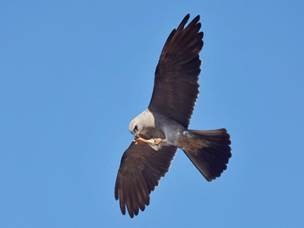
Too often, we race past the most beautiful things in our lives. Tragically, man’s creativity has manifested itself in ways that lock us into an artificial environment that fortifies our false sense of omnipotence and distances us from the world of which we are a part. Breaking out of that bubble requires some humility and reconnection to the wonder of our youth. Joy and a sense of the divine are always there if we look for them.
On good mornings, everything seems sharp. Clear. I see with depth. I sense, I know, that all I see is a seamless reality. I sense the stillness of the depths. Echoes of eternity. Like standing on a mountaintop and scanning a panorama of the earth below. A breeze like a divine breath.
*
Joy in the present becomes a beautiful memory as it moves into our past, both individual and collective. It happens often to me when I hear certain pieces of music, songs from my salad days that I associate with memories both painful and joyful or exhilarating, a sensation I experienced so often as a young man when everything was new, and each experience formed a footprint in the mind. That, I think, is the fountain, the true source, of the very human phenomenon we call “nostalgia.”
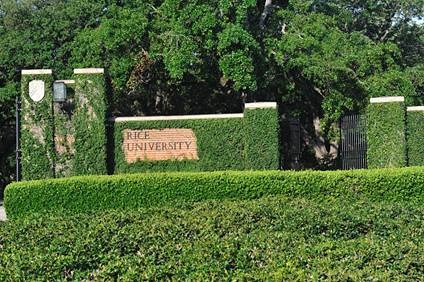
This memory is quite vivid: I heard this song, driving along the 610 loop in Houston, passing by Memorial Park at dusk and seeing the lights of the city come to life like earthbound stars. It was spring, 1985. A momentous year for me. I was planning my first trip to what was then the Soviet Union, and the whole world seemed in front of me. Great times. When I hear the song now, the first thing I picture is 1980s Houston at dusk and I think of Rice University, where I began studying Russian, and the beautiful University and West University Place areas around it. I loved my hometown and I miss it as it was. The drive is still there in my memory. I feel immense gratitude for the doors that were opening for me and for that feeling of being fully alive and aware.
*
I met my wife Stacy in 1986. We were married at Christmastime, 1987. Together, we would share a great adventure. Being young still, I had no doubts or qualms about anything. We were ready. Perhaps I was naïve, but I just knew that the road was open and we would take it and fulfill a potentiality still vague but as strong and real as anything we could see or touch. Everything would work out and the sky was the limit. I had a job waiting in Washington, D.C.
*
I had a great decade there. I can’t complain about it at all, but I learned some things. The most important point being that “we” were not “the good guys” who could do no wrong. Russia had fascinated me from the beginning of my personal journey in which that great, beautiful, tragic, puzzling country played such an important role. Russia is a land of extremes in climate, history, and national temperament. The West was science. Russia was poetry. European enough to be somewhat familiar, but exotic, too, and mysterious. The Russians of that post-Cold War era, as chaotic as it was, still, as had the Soviets I met, harbored hopes for friendship with America. I warmed up to them, as notoriously distant as Russians seem before you get to know them, and they to me, as I think they sensed that I was sympathetic and, above all, interested in what they had to say. Those relationships nurtured a breadth and depth of understanding that I had lacked, an understanding of the complexities and nuances of all-too-human people from every place I visited. That dawning of a new awareness was also a beacon like those moments of joy. My world had expanded and I was the better for it. I would never again be so unaccountably certain or susceptible to stilted narratives or so quick to designate enemies. I was learning, maturing, and appreciating experience, however difficult.
*
Vladivostok. Winter, 1992. A winter storm had covered the city on the Bay of the Golden Horn in a thick blanket of snow, white peaked mountains around it. I had passed through Japan and experienced East Asia for the first time, traveling on to Khabarovsk in the Russian Far East, and then to Vladivostok. I trudged through the snow, exalting in the experience. Fully present. Two weeks later, I was in Moscow, and I walked across Red Square with snow softly falling. And I stopped and took it all in. It was very quiet and still as I walked past the Spassky Tower and gates through which motorcades sometimes emerged, racing through the square to appointed destinations. The pyramid of Lenin’s tomb was to my right, the dazzling onion domes of St. Basil’s ahead of me. So far from my other life, but the startling truth was that it was one. One unity, as with the city lights of my hometown and the magnificent raptors I would admire so many years later. And the whole of it was life. Being. Experience.
I’ve learned that all the “practical” things we immerse ourselves in, the necessary drudgery of existence, can dull the experience, depth, and the breadth of living that make our journey meaningful. We get lost in the details of getting by. And, in the extreme, simply surviving. But surviving for what? As what? We may forget that interacting with the marvels we have right in front of us, with others, with the natural world, miraculous in their complexity, fills our lives with substance, meaning and purpose. That’s why we are here. To have that opportunity. We can seize it and make the most of it, not through careerism, asserting our Will to Power over others, or counting our money, but by the sheer joy that comes with living fully. The world, us, the marvels of which we are one, are expressions of the God from whom the universe flowed, its order, its ability through sentient beings to know itself and to experience God. For God to fulfill his own creative nature. Modernity and postmodernity are traps we can fall into, endless mazes of a manufactured reality bent on cutting us off from the wellsprings of human experience, draining us spiritually. We may not be capable of escaping the System fully, but we have it in our power to resist simply by noticing what doors are always open for us. Walk through them. Take it all in. Step away from the noise, and, if one is ready, enjoy pure experience.
*
When I arrived home after my lengthy journey in that memorable year of 1992, my oldest daughter Elizabeth, then a year old, didn’t recognize the bearded man in a fur hat and heavy coat who reached for her. Startled, she cried but eventually calmed down. That night as she laid in her cradle, I watched her go to sleep. The whole world was in that little girl.
To see a world in a grain of sand
And a heaven in a wild flower,
Hold infinity in the palm of your hand
And eternity in an hour.
William Blake, Auguries of Innocence
Please consider supporting American Remnant: A green “Donate Today” button has been added at the end of each article (see below) appearing on the website. If you value what AR is doing, please consider supporting the website financially. $5, $10, or any amount that you can afford. Regular donations would especially be appreciated. Thank you!
Chronicles contributor Wayne Allensworth is the author of The Russian Question: Nationalism, Modernization, and Post-Communist Russia, and a novel, Field of Blood. For thirty-two years, he worked as an analyst and Russia area expert in the US intelligence community.


