
By Wayne Allensworth
Myths have varied layers of meaning. Existentialist philosopher Albert Camus thought the myth of Sisyphus underscored life’s absurdity. Every trial was Sisyphus’ vainly pushing that boulder up the hill until he failed and it rolled backward. Then he began again. The tale reflects Nietzsche’s eternal recurrence. To no end. The only solution, Camus thought, was to embrace the struggle, as if the human being trapped in a meaningless universe were calling out the void itself, challenging it to try and break him. Like Hemingway’s Santiago in The Old Man and the Sea, a man could be destroyed but not defeated.
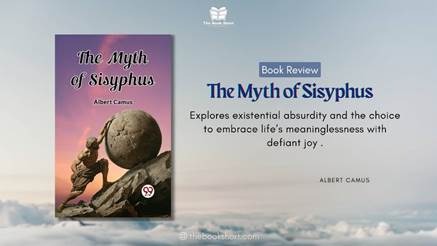
At some point, after staring into the void that the death of God presented to modern humans, I began to see things differently. Perhaps the existentialists were partly right in believing that the struggle was baked into the cake of being, that it could not be some other way. Only I couldn’t get past the notion that their assertions of creating meaning in an indifferent universe were themselves meaningless. Howling into the void seemed like a recipe for the mentality of mass shooters or grasping sociopaths. Making claims about moral behavior and the dignity of the individual in such a universe made no sense.
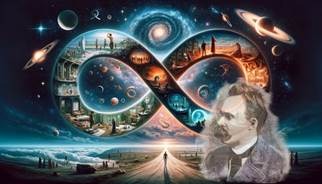
But a couple of earlier precursors of the 20th-century existentialists had been there and made a different claim when they reached the Sisyphus juncture of existence. I have in mind Soren Kirkegaard and Fyodor Dostoevsky. Both plumbed the depths of despair and existential loneliness. But they embraced what came to be called Kierkegaard’s “leap of faith”— the intuitive grasp that our sense of morality and meaning was not a reassuring fantasy but a reflection of a deeper reality. Transcendence was the source of being and meaning. God — not as the atheists’ cartoon “Flying Spaghetti monster,” but as Being itself expressed in the embodied reality we experience — is the fount of meaning. That fount is beyond good and evil in the sense of common codes of behavior and ethics. That spirit underlies all ethics but is beyond the letter of the law. I think that’s what Kirkegaard got at in interpreting the story of Abraham’s sacrifice. And it’s what Jesus was driving at in his condemnation of the Pharisees and their delight in condemning others by the letter of the law. The rules meant power to them, the very opposite of the direction that the source of all law should take us in.
Faith is essentially trust — trusting in what we cannot express in conventional language, which is why our foundational stories are poetry and parables, why Jesus taught indirectly in parables. That’s why the philosophers who grappled with the question of existence best expressed themselves in literature and literary language.
Reaching this understanding prompted the scales to drop from my own eyes years ago. It’s not something that one can formulaically express to others. Direct speech does not easily convey it. It can’t be measured or weighed. It can only be sensed and experienced. It happens when we break out of the modern — now postmodern — shell of strict categorization and simple answers, which we express as ideological boxes to check off. The boxes of those who are all-too-sure of themselves, of Pharisees, whether religious or ideological. It’s that certainty expressed in modern modes of thought that Iain McGilchrist warns against.
Our lives are an unfolding process that does not end until death, and I think, does not even necessarily end there. I’ve attempted to reframe the Sisyphus story as process, but a process with the potential for progress. Not the angry pushback against the void, but a struggle in which we advance the boulder a little each time it rolls back down the hill. When our eyes open to that possibility, the existential struggle takes on a different complexion, closer to that of the leap of faith, avoiding the pitfalls of life as absurdity. That perspective can make us more understanding. More forgiving.
Life is a struggle. Embrace it and savor the moments of joy all the more. Understand that there is no final achievement of an elusive happiness that will never slip away. A loss means you had something to lose. And something to gain.
I thought about this on a cool morning as I walked up a hill. Ahead of me, I saw someone on the horizon, standing in the morning sun’s unique clarity. A glow, like a hazy halo, was around them. And I saw the depth and understood the perspective of living just a little bit better. Embracing a sort of eternal recurrence, the curse of Sisyphus, didn’t mean embracing a vain attempt to declare victory over absurdity. The process hopefully will never stop.
Chronicles contributor Wayne Allensworth is the author of The Russian Question: Nationalism, Modernization, and Post-Communist Russia, and a novel, Field of Blood. For thirty-two years, he worked as an analyst and Russia area expert in the US intelligence community.
Please consider supporting American Remnant: A green “Donate Today” button has been added at the end of each article (see below) appearing on the website. If you value what AR is doing, please consider supporting the website financially. $5, $10, or any amount that you can afford. Regular donations would especially be appreciated. Thank you!


