
By Wayne Allensworth
As you grow older, they say, you become more like the true self that is the core of individual personality. If true, then growing older suits me well, as I was always what people called “an old soul,” in some ways mature beyond my years. That maturity came from reflection and self-awareness, which opens your eyes to see the world beneath its surface. It doesn’t mean you won’t make mistakes, sometimes critical ones. Experience is a hard teacher, and illusions are washed away with experience. You can grow cynical and disillusioned or take what comes and learn from it, granting a bit of grace for others and yourself. With me, it was some of both until life’s cumulative experience brought with it more understanding. I was shown grace and forgiveness many times and learned that grace is what made life bearable. I also learned that if I was always at core the same person, I couldn’t expect anyone to become something other than what they were. But it wasn’t out of bounds to ask for improvements. That way, grace corrected a tendency to fatalism and cynicism.
It’s a dance. Two steps one way, one step another. Keep your head on a swivel. Be careful, but don’t freeze up. Learn from watching others, then take that leap of faith and try out the steps yourself. Don’t despair, we all fail. But get up when you fall and keep at it. The journey is the destination. Don’t keep score on your personal “They done me wrong” ledger. Everything is not about you. And how many times — don’t I know it — have you hurt someone else without even knowing or thinking about it?
That “me” at the core of one’s being is tested and tried and hammered by events beyond anybody’s control. You’ll get angry at fate or the Universe or God, but reject bitterness, and get rid of self-destructive anger. Failure and success, joy and sorrow, fulfillment and emptiness are complementarities necessary to create the tension and friction that can carve meaning out of what existentialists called the “absurdity” of life. Personality and individuation take form in that environment for good or ill. When you feel the urge to take vengeance or spite another, don’t blame your circumstances if such actions cost you. There is a self that is not the ego, the will to power or the mask one often wears as a public persona, that is responsible for the ego’s actions. If you are lucky, when the ego talks to you and says, “Go ahead and do it. Everybody else does,” the next voice you hear will be your conscience.
You become a fully-realized personality by interacting with others, as well as with the world around you. The most destructive and dangerous notion of our age is that individuals can realize themselves without reference to the past or regard for the future, as isolated and self-created beings. Sartre may have been right in a certain sense that hell is other people — or can be if you let them make it hell for you — but life without others is truly hell. Both things are true. Complementarity again. Only your relations with others and the small acts of genuine connection with them lend meaning and purpose to our lives, which entails accepting responsibility. Responsibility avoided is a false security. Chasing “success” is a never-ending treadmill. What matters is who you meet and interact with along the way. Family is essential. Children teach you as much as you teach them. Life is the best gift you can give.
One of my favorite movies is It’s a Wonderful Life. It’s easy to see that movie as holiday treacle. It is anything but. George Baily’s struggle is everyone’s. George has his eyes on the prize that always tempts us: becoming “somebody” in terms of achievement and recognition. Success as laurels, money, awards, and bridges built. They are not in themselves bad things, but become empty vessels without something else. That is what George learns. The core of personality that curbs the ego holds George back and keeps him in his hometown. The gift that angel Clarence gives him is seeing what life in Bedford Falls would have been like without his sometimes grudging, often frustrated, decision to stay — to take on responsibility. He learns that he changed and shaped others with whom he interacted. The example he made, however reluctantly, made life more bearable for them. But beyond that, he grows more aware of how they shaped him. It was something he knew at some level but had never articulated or brought into focus. The small acts of sacrifice and kindness they make for him are the fruit of George’s own actions. George learns gratitude.

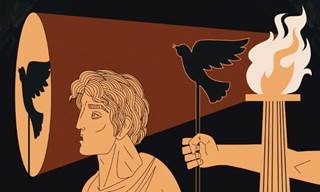
George’s father once acknowledged that George the dreamer was also George the old soul. “You were born older” than others, father told son, implying that with self-awareness comes duty and obligations. I was fortunate to have had parents who saw that in me, and without thinking about it, adjusted their sights accordingly. I was apt to, as they said, be content with my “nose in a book,” vicariously experiencing life through my imagination. Leaving that self-created world would be dangerous. They encouraged my reading and interest in learning, but also pushed me, however subtly, to get out in the world and take those risks. I’m glad I did. Reading can be a kind of experience — especially if it is enriched by actual experience, by risk, by putting oneself at risk and learning from it. I avoided a life that would have been something like living in Plato’s cave, seeing only the shadows cast by a reality that was beyond me.
My parents were not readers and never finished school. But they had learned something along the way. I’m eternally grateful for them and beholden to them. I hope that I have paid that love and attentiveness back and passed on the frequently unspoken lessons I learned from them.
Chronicles contributor Wayne Allensworth is the author of The Russian Question: Nationalism, Modernization, and Post-Communist Russia, and a novel, Field of Blood. For thirty-two years, he worked as an analyst and Russia area expert in the U.S. intelligence community.
Please consider supporting American Remnant: A green “Donate Today” button has been added at the end of each article (see below) appearing on the website. If you value what AR is doing, please consider supporting the website financially. $5, $10, or any amount that you can afford. Regular donations would especially be appreciated. Thank you!


