By Wayne Allensworth
My father taught me the most about living in an all-too-corrupt world. He was a simple man, a carpenter by trade. But like many of the men I knew growing up, he lived by an unspoken code; he never fully articulated his rules for life’s road, but they were evident in his actions. Put simply, some things he would not do. When he contracted for a job, say remodeling a house, or building a staircase or cabinets, he had his standards for how the work should be done. He would not compromise. If an employer wanted him to cut corners to save costs, he refused. He would not do the job halfway. If a homeowner had a certain picture in his head about building something — say, some built-in bookcases — and it simply would not work, he would tell them so. He was one of the most honest men I ever met. He paid his debts and hated the idea of being in debt. He told the truth, come what may. He had a prickly code of honor like other men of his background. He could be harsh but was not cruel. Some things he would not put up with and some things he would not do. He taught me not to take any guff off of anyone, to be honest and to be fair, but never bend on matters of principle. He was unreflective and did not give any thought to those principles he took for granted. He went to his grave justified as a man.
Young people face a systemic reality that has been fully exposed by the Epstein scandal as corrupt, vile, even demonic. The system is rotten to its core and simply cannot be reformed. When it fails, young people will be left to try and climb out from under the rubble to start anew, assuming such an opportunity presents itself. To help them, all I can do is tell you my story and what I learned along the way. My father could never articulate his way of living, but words have been my life. Words and principles that I tried, however imperfectly, to live in keeping with, as they were not mere abstractions to me, but the stuff of concrete reality.
So here is my advice …
Not too long after I began my career in the intelligence community, disillusionment with what I had thought was the system — versus what is what it actually was — changed my views substantially. The “Blackhawk Down” fiasco in Somalia in 1993 was the last straw for me. Brave Americans were slaughtered for no good reason. “We” had intervened yet again in some hell hole that had nothing to do with anything I cared about. And those responsible for that disaster simply wrote it off and moved on to the next fiasco. No one was held accountable. As always with Washington’s imperial adventures, the end result was lots of Somalians imported to further dilute whatever was American about America. We all know the results of such careless and irresponsible policies. We are living with them in a country that is no longer our own in many serious respects.
I recently gave a brief rundown of what I saw in Russia after the collapse of communism. The ideology that had been the foundational myth of a country had been exposed as criminal, degenerate, and demonically murderous. Its political and economic system had failed. And worse, the faith that underpinned it had failed. Disoriented Russians lived in social crisis. Oligarchs replaced the communist rulers. Corruption was rampant and intruded on the everyday lives of ordinary people who had to pay bribes to get medical care or simply cut through the vast labyrinth of bureaucracy for which Russia is famous.
Meanwhile, the “deaths of despair” that heartland America has endured were also very much in evidence in the Russia of that time. Alcoholism, drug addiction, suicide, a collapse in birth rates and an explosion of abortions — they outpaced live births for a long time — were symptoms of a deeper systemic crisis and a crisis of the spirit.
In the late 1990s, a certain political figure was beginning to make waves in Russia. I sensed something different about him, though I knew he was rubbing shoulders with some very unsavory people. When I asked a Russian friend about him, the friend said that he hoped for the best and thought the man was honest. “How can you tell?,” I asked. “I can tell he’s not rich,” said my Russian friend. His shabby clothes, his car, his bad teeth, his simple tastes — to my Russian friend, they told the tale. We never found out what the truth was, or what might have been. That rising political star was marginalized, then died in an aircraft disaster. Was he assassinated? Or was the crash merely one of many at the time in a country that was no longer properly maintaining its fleets of aircraft? I don’t know.
I knew people who were working within the system as advisors or officials. Some had simply resigned themselves to working for gangsters, saying that their particular gangsters were bad, but the others were worse. And I wondered, “How does a person keep his soul in such circumstances?” I had already begun to wonder the same thing about “our” system — and sensed that I would not, could not, rise above a certain level in the pecking order and keep my integrity intact. I knew people higher up who seemed to be decent enough, yet I wondered about them, too. The price of admission for a careerist was buying into whatever the official line was, parroting that line, at least to a sufficient degree to survive, and accepting that Washington had a right to determine the fate of the world, to overturn governments far from us, and to deal with the most corrupt and criminal figures to achieve “our” goals. It was all for the sake of “national security,” or so we were — and are — told. It meant pretending you didn’t know how things really worked. It meant turning a blind eye to harsh realities.
And the things a normal person might reflect on as having the most to do with real national security — maintaining a national ethnic core essential to social cohesion, maintaining American industrial power, keeping debt within reasonable bounds, and enacting policies that would encourage the formation of families and home ownership, for instance, were not taken as actual “national security” goals. They were political footballs during election season, then, the game over, largely forgotten.
Temptation was not far from me, even in my mid-level position. While I was still in Washington, a lobbyist called me to ask for help. The firm wanted me to polish the image of an exiled Russian oligarch who had supporters in Congress. I declined. I eventually left Washington and was a contractor for the rest of my career, keeping the circus at arm’s length. But the siren call of money and intrigue was still there. A source of mine, off to London to meet a particularly notorious oligarch-in-exile who was plotting his comeback, contacted me. His plan was to undermine Russian President Vladimir Putin by spreading compromising material — kompromat — on him in the American and British press. I was to write articles that the plotters could plant in the press. I advised my interlocutor that he should stay away from this plot: He who sups with the Devil should use a long spoon. And what right had we, as Americans, to attempt to overturn the authorities in another country?
Long story short, I remained a not-so-prosperous contractor. My rules were to tell the truth, insofar as I saw it. I made judgement calls on what was happening in the Kremlin and Russian society, and when I felt I had to, criticized US policy. My goal was to never back down on a matter of principle, and that was hard enough. Sometimes I wondered if I had bent too much. Along the way, I did not pursue opportunities to make money working for big corporations that had far fewer scruples about their mode of operation. I wasn’t especially pure of heart. I’m a sinner like everybody else. But my father was always there, speaking to me, even after his death.
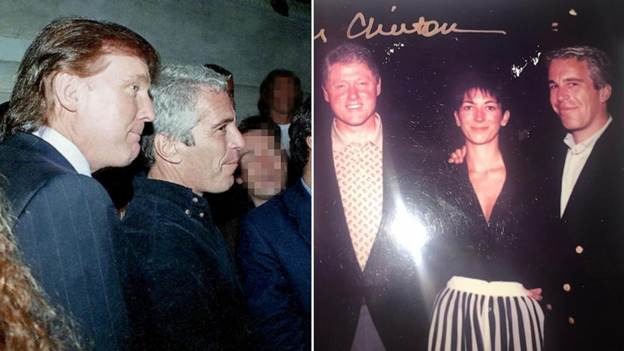
We should acknowledge that “Epstein” wasn’t just a devilish figure in a nasty story. It is becoming clearer that “Epstein” is the system — a shadow government that runs across party and ideological lines, one that is totally unscrupulous, and, yes, demonic, in large part runs the world. Vast corporate entities, unscrupulous politicians, ruthless gangsters, shadowy intelligence operatives, foreign interests, and always, big money, are enmeshed in a web of relations, a power structure that too few are willing to call out. The Clinton, Bush, Obama, Biden, and Trump administrations have protected an unseen power structure that supersedes elected officials and legislatures and judges and courts. It is a ruthless and perverse structure that has its tentacles in practically everything.
To young people out there: The world has always been difficult to navigate while maintaining one’s integrity. What’s changed is the scale and reach of the political-economic-cultural entity I’ve called “the Blob.” You must make your way as best you can. Do not have any illusions about the powers-that-be. Here is a question you must ask yourself — and answer — one day: “What is it that I will not do?”
You may not know the precise answer until the time comes.
Chronicles contributor Wayne Allensworth is the author of The Russian Question: Nationalism, Modernization, and Post-Communist Russia, and a novel, Field of Blood. For thirty-two years, he worked as an analyst and Russia area expert in the US intelligence community.
Please consider supporting American Remnant: A green “Donate Today” button has been added at the end of each article (see below) appearing on the website. If you value what AR is doing, please consider supporting the website financially. $5, $10, or any amount that you can afford. Regular donations would especially be appreciated. Thank you!


