
By Wayne Allensworth
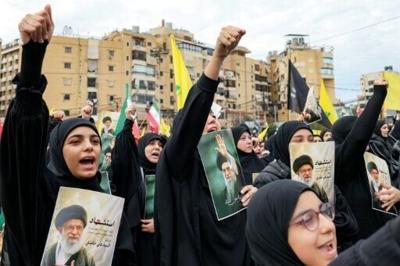
As of Monday, with the war in its third day, Israel is striking Southern Lebanon, the first US casualties have been recorded, and Kuwait shot down three American warplanes in a “friendly fire” incident (the pilots are reportedly alright). Meanwhile, Iran launched a missile attack on a a British military base in Cyprus. The war is spreading. Israel has been bombarded by Iranian attacks, and President Donald Trump says the war may last weeks—but we have heard that before. But he also would not rule out “boots on the ground” in Iran. Oil prices are rising and tanker traffic through the Strait of Hormuz is blocked. China depends on oil from the region and cannot tolerate this situation for long. US munitions stockpiles are near exhaustion after years of supplying Israel and Ukraine, and the Iranians look determined to continue the fight. The risk of escalation is high, as is the risk of an economic crisis in the US.
A few thoughts: Internet memes are mocking “Operation Epic Fury” as “Operation Epstein Fury,” an attempt by Trump to distract public attention away from the most outrageous, far-reaching scandal one could imagine. As I’ve noted previously, it seemed as though the Epstein affair opened a can of worms that prompted even more erratic and ill-considered actions by the Trump administration. Donald Trump was obviously rattled by the scandal and its implications, and it’s likely Israel leveraged that sense of panic to press Trump to launch the regime change war against Iran it had long desired. It could be that Israel resorted to nuclear blackmail to force Trump’s hand—either attack Iran or Netanyahu would authorize the use of nuclear arms against Iran. It also seems likely that the fact that as sentiment for Israel is declining in the US, Netanyahu calculated that the time to push Washington into an all-out war with Iran was now. The future appears uncertain as far as unequivocal US support for Israel. Meanwhile, Israel may be looking for a new patron in India.
Trump may have thought that a decapitation strike against the Iranian leadership would force Tehran to install a regime more amendable to US influence. He probably believed, mistakenly, that street protests might erupt in the Islamic Republic that would spur on a change of regime. Neither seems to be in the cards. If Trump believed that attacking Venezuela and Iran might undercut BRICS and those countries’ efforts to move away from the dollar, thus eroding the dollar as the global reserve currency, I would think the result will be the opposite. If he believes that the public might forget about the Epstein scandal, the above-mentioned memes point the other way. If the administration entertains the notion that its actions will ultimately bail out the debt-ridden US economy, that appears to be a pipe dream as war costs escalate. And if Israel believes that its interference in US politics and its wars can counteract “anti-Semitism,” that appears to be the biggest mistake of all, as its brazen actions have had the opposite effect. US Ambassador to Israel Mike Huckabee’s telling Tucker Carlson that if Israel can “take it all,” that is, the entire Mid-East region, has only hardened the resolve of Israel’s enemies. Finally, if the goal was nuclear non-proliferation, it’s more likely that the rest of the world, and Iran, will believe that the only way to remain secure is by acquiring nukes. After all, a nuclear armed North Korea has not been attacked.
This war will accelerate US decline and risks a direct confrontation with Iran’s Russian and Chinese allies. Trump’s and Netanyahu’s naked aggression, the assassination of Iranian leaders (which is unlawful in itself), and the obvious US ploy of dragging out nuclear negotiations with Iran to buy time and plan the next wave of attacks has deprived Washington of whatever moral authority it had left. There has not even been a semblance of lawfulness in any of the administration’s actions. Trump’s stunning reversals from his campaign promises—especially regarding releasing the Epstein files and no more “regime change” wars—is a breathtaking, brazen betrayal of his base. I don’t think many more countries will be in a big hurry to join his misnamed “Board of Peace.”
Chronicles contributor Wayne Allensworth is the author of The Russian Question: Nationalism, Modernization, and Post-Communist Russia, and a novel, Field of Blood. For thirty-two years, he worked as an analyst and Russia area expert in the US intelligence community.
Please consider supporting American Remnant: A green “Donate Today” button has been added at the end of each article (see below) appearing on the website. If you value what AR is doing, please consider supporting the website financially. $5, $10, or any amount that you can afford. Regular donations would especially be appreciated. Thank you!



A succinct summary of where things stood. Things have only gotten worse since this was written.